
The Power of Play: Engaging Games for Preschooler Development
For children aged three to five, the world is a vibrant, ever-expanding playground. Every day is an opportunity for discovery, learning, and growth. While formal education might begin later, these crucial preschool years are a period of rapid development across all domains – cognitive, physical, social-emotional, and language. And the primary vehicle for this incredible growth? Play.
More specifically, engaging in various types of games offers a structured yet flexible way for preschoolers to explore their abilities, understand the world around them, and build essential skills that will form the foundation for future learning and life. Games aren’t just a way to pass the time; they are the work of childhood, a vital tool for development.
This article will delve into why games are so important for preschoolers, explore different types of games that cater to various developmental needs, and offer practical tips for parents and caregivers on how to incorporate play into a child’s daily routine effectively.
Why Games Matter So Much for Preschoolers
At this age, children are transitioning from parallel play (playing alongside others without much interaction) to more associative and cooperative play. Their motor skills are becoming more refined, their language is blossoming, and their ability to think symbolically and solve simple problems is emerging. Games provide the perfect environment to nurture these burgeoning abilities.
Here’s a breakdown of the key developmental benefits:
-
 Cognitive Development: Games challenge preschoolers to think, remember, and solve problems. Matching games improve memory; simple puzzles enhance spatial reasoning; sorting activities teach classification; and following rules in a game builds attention and logical thinking. They learn about cause and effect, patterns, numbers, and shapes in a fun, low-pressure way.
- Physical Development: Both gross motor (large muscle) and fine motor (small muscle) skills are honed through play. Running, jumping, and balancing games improve coordination and strength. Activities like building with blocks, threading beads, cutting with safety scissors, or manipulating playdough enhance dexterity and hand-eye coordination – crucial for later writing and self-care skills.
- Social-Emotional Development: This is where games truly shine in building crucial life skills. Playing with others teaches sharing, taking turns, and cooperation. Pretend play allows children to explore different roles, understand emotions, and develop empathy. Dealing with winning and losing helps them manage frustration and build resilience. Following rules introduces the concept of social norms and self-regulation.
- Language and Communication: Games are rich in opportunities for language use. Children listen to instructions, communicate their intentions, negotiate roles in pretend play, describe actions, and expand their vocabulary. Singing songs with actions links language to movement and memory. Storytelling games encourage narrative skills.

- Creativity and Imagination: Open-ended games and pretend play allow preschoolers to use their imagination freely, create scenarios, and think creatively. This fosters divergent thinking – the ability to come up with multiple solutions or ideas.
- Problem-Solving and Critical Thinking: Whether it’s figuring out how to fit puzzle pieces together, deciding who goes first, or working out a strategy in a simple board game, children are constantly engaging their problem-solving skills.
- Building Confidence: Successfully participating in a game, mastering a new skill, or contributing to group play boosts a child’s self-esteem and confidence.
Types of Engaging Games for Preschoolers
To cater to the holistic development of preschoolers, it’s beneficial to offer a variety of game types. Here are some categories with examples:
- Gross Motor Games: These get kids moving!
- Tag Variations: Simple chase games like traditional tag or “freeze tag” (where being tagged means freezing until unfrozen by another player).
- Hide-and-Seek: Excellent for spatial reasoning, counting, and patience.
- Obstacle Courses: Create simple courses using pillows, tunnels, chairs to crawl under, lines to walk on, or boxes to climb over. Great for coordination and following directions.
- Simon Says: A classic for listening skills and following instructions, incorporating various movements.
- Red Light, Green Light: Develops impulse control and listening.
- Dancing and Movement: Put on music and encourage free dance, or try structured movement songs (“Head, Shoulders, Knees, and Toes”).
- Fine Motor Games: These focus on small hand movements and dexterity.
- Building Blocks: Wooden blocks, LEGO Duplos, or magnetic tiles encourage stacking, balancing, and creating structures.
- Puzzles: Chunky puzzles, peg puzzles, or simple interlocking puzzles (like 4-12 pieces) improve hand-eye coordination and problem-solving.
- Threading and Lacing: Large beads, pasta tubes, or lacing cards with thick yarn or string build fine motor control.
- Playdough and Clay: Squishing, rolling, cutting, and shaping playdough strengthens hand muscles and encourages creativity. Provide child-safe tools like cutters and rollers.
- Drawing, Painting, and Cutting: Provide crayons, markers, paint, and safety scissors. Encourage scribbling, drawing shapes, painting freely, and practicing simple cuts.
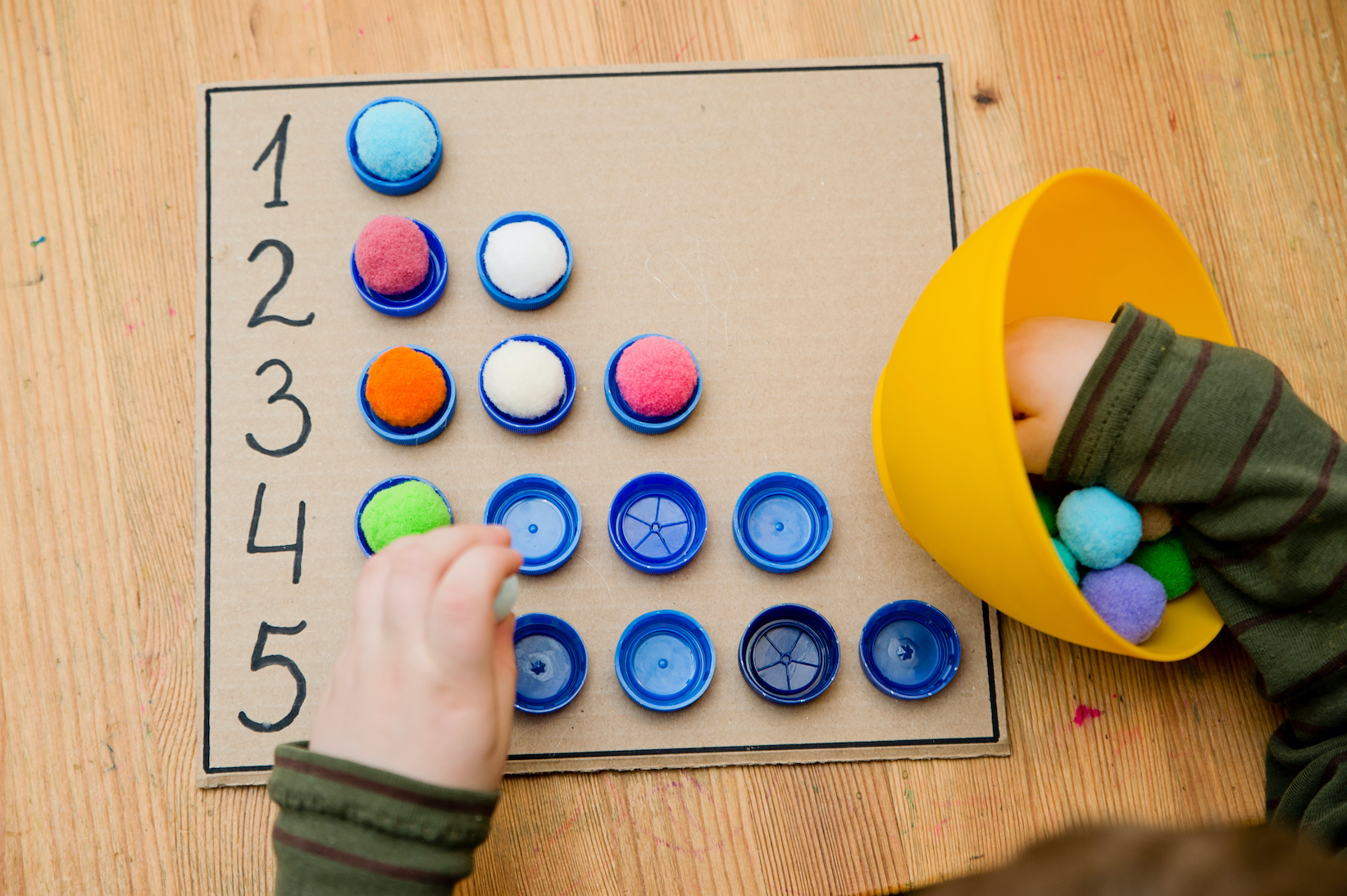
- Sorting Small Objects: Using tweezers or tongs to sort small items like pom-poms, beads, or buttons by color or size (under supervision) refines the pincer grasp.
- Cognitive and Problem-Solving Games: These challenge the mind.
- Matching Games: Memory match with cards or matching pairs of socks, toys, or pictures.
- Sorting and Classification: Sort toys by color, size, shape, or type (animals, vehicles, etc.).
- Simple Board Games: Games like Candyland, Snakes and Ladders, or simple picture dominoes introduce concepts of rules, turn-taking, counting spaces, and dealing with chance.
- Patterning: Using blocks, beads, or other objects to create simple patterns (e.g., red, blue, red, blue) and asking the child to continue them.
- Counting Games: Counting steps, counting objects, simple dice games, or counting fingers and toes.
- Social-Emotional and Pretend Play Games: These build social skills and imagination.
- Dress-Up: Provide old clothes, hats, scarves, and accessories for imaginative role-playing.
- Playing House/Doctor/Store: Set up simple scenarios. Use toy food, doctor kits, or empty boxes as props.
- Puppet Shows: Using hand puppets or even just stuffed animals to act out simple stories or scenarios.
- Playing with Dolls or Action Figures: Encourages storytelling, expressing emotions, and understanding social interactions.
- Taking Turns Games: Any game explicitly requiring taking turns, like rolling a ball back and forth or building a block tower together.
- Language and Literacy Games: These boost communication and pre-reading skills.
- “I Spy”: A classic for vocabulary, color/shape recognition, and listening skills. Can adapt to “I Spy with my little eye, something that starts with the sound…” for pre-literacy.
- Rhyming Games: Say a word and ask the child to think of words that rhyme (cat, hat, mat).
- Storytelling: Start a story and have the child add the next sentence or two. Use picture books as prompts, asking “What do you think happens next?”
- Singing Songs with Actions: Enhances memory, listening, and motor skills while building vocabulary.
- Picture Book Conversations: Don’t just read the words; talk about the pictures, ask questions, and connect the story to the child’s experiences.
- Creative and Sensory Games: These engage the senses and encourage artistic expression.
- Sensory Bins: Fill a bin with rice, beans, pasta, sand, or water and add scoops, cups, small toys, or natural objects (leaves, stones). Provides tactile exploration.
- Water Play: Splashing, pouring, and using containers in a tub or water table.
- Art Exploration: Provide various materials – paint, crayons, chalk, collage materials (paper scraps, fabric, nature items) – and let them create freely. Focus on the process, not the finished product.
- Music Exploration: Provide simple instruments or use household items to make sounds and rhythms.
Tips for Maximizing the Benefits of Games
Simply providing toys isn’t enough; adult involvement is key to unlocking the full potential of games for preschoolers.
- Be Present and Engaged: Get down on their level, play with them, show genuine interest, and participate in the fun. Your interaction is more valuable than the most expensive toy.
- Follow Their Lead: While you can introduce games, be flexible. If a game evolves into something else based on their imagination, go with it! Child-led play is incredibly powerful.
- Keep it Simple: Preschoolers have short attention spans. Games should be easy to understand and relatively quick.
- Focus on the Process, Not Just the Outcome: Celebrate their effort, creativity, and participation rather than just whether they won or completed a task perfectly.
- Talk, Talk, Talk: Narrate what you’re doing, ask open-ended questions (“What are you building?”, “How does that feel?”, “What happens if…?”), and encourage them to talk about their play.
- Model Good Sportsmanship: Show them how to take turns, share, and handle both winning and losing gracefully.
- Ensure Safety: Supervise play, especially with small objects or during physical activities. Make sure the play environment is safe.
- Offer Variety: Rotate toys and introduce different types of games to keep them engaged and stimulate various skills.
- Limit Screen Time: While some educational apps exist, hands-on, interactive play with people and objects is far more beneficial for holistic development at this age.
- Make it Joyful: The most important tip is to keep it fun! When play is enjoyable, children are more likely to be engaged, learn, and want to play more.
Conclusion
Games are far more than just entertainment for preschoolers; they are fundamental building blocks for cognitive, physical, social, and emotional growth. Through the simple act of playing, children learn to solve problems, cooperate with others, express themselves, refine their movements, and make sense of the world around them.
By understanding the immense value of play and actively engaging with children in a variety of games – from active physical challenges to quiet sorting tasks and imaginative role-playing – parents and caregivers can provide a rich, stimulating environment that nurtures development, builds crucial skills, and, most importantly, fills childhood with joy and wonder. So, get down on the floor, put on some music, grab some blocks, and play! It’s the best investment you can make in a preschooler’s future.


